Nothing to learn
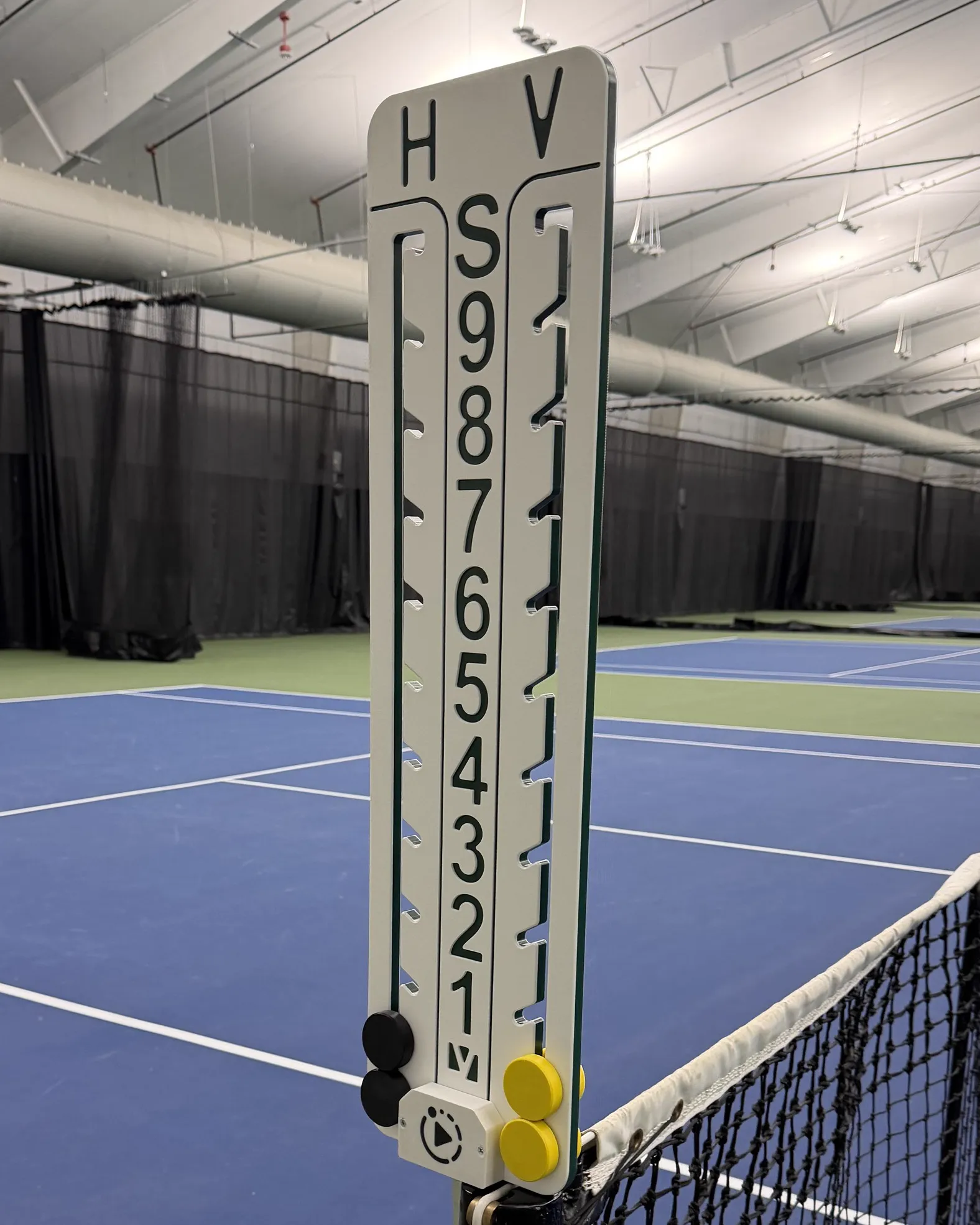
Same pegs, same notches, same numbers. The column reads where the pegs sit, so nobody at the court touches a screen.
New · On-court scoring
Slide the peg. The score is live.
A sealed sensing column that fits your existing slide scoreboard. Players keep score the way they always have, and the board sends every change to Save My Play over Wi‑Fi. No buttons, no screen, no wiring.
Pre-orders start soon. Get early access and we’ll let you know first.
On the court
The same board, the same pegs, the same notches. Players keep score exactly the way they always have.
Everywhere else
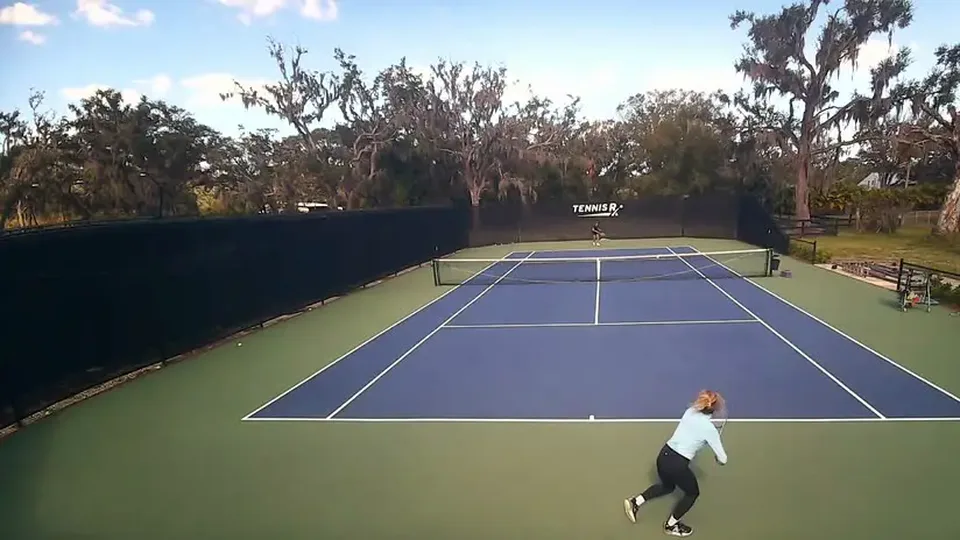
Every peg move reaches Save My Play in a moment, so the score is on your stream, your recordings and the app without anyone typing it in.
Try it
Drag a peg to a new notch, or tap one, and every screen keeps up. When a set ends, slide the spare peg up to S: the set is saved and the next one starts at 0–0, all the way through a best-of-3 match.
Waiting for a peg to move
Go on, slide it.
Home and Visitor by default. Add the matchup in Save My Play’s online scoring, or pair a scoring app that tracks matchups, and players’ names show instead.
How it works
Non-contact magnetic sensing. Nothing touches, nothing wears, nothing to calibrate.
Same pegs, same notches, same numbers. The column reads where the pegs sit, so nobody at the court touches a screen.
The moment a peg moves, the score updates on your live stream, your recordings and the Save My Play app.
Every update carries the whole board, never just “plus one”. Slide a peg back and it’s read as a correction, not a new game.
Set it and forget it. When it does need a top-up, charge it right on the board through the sealed USB‑C port.
Fits the board you have
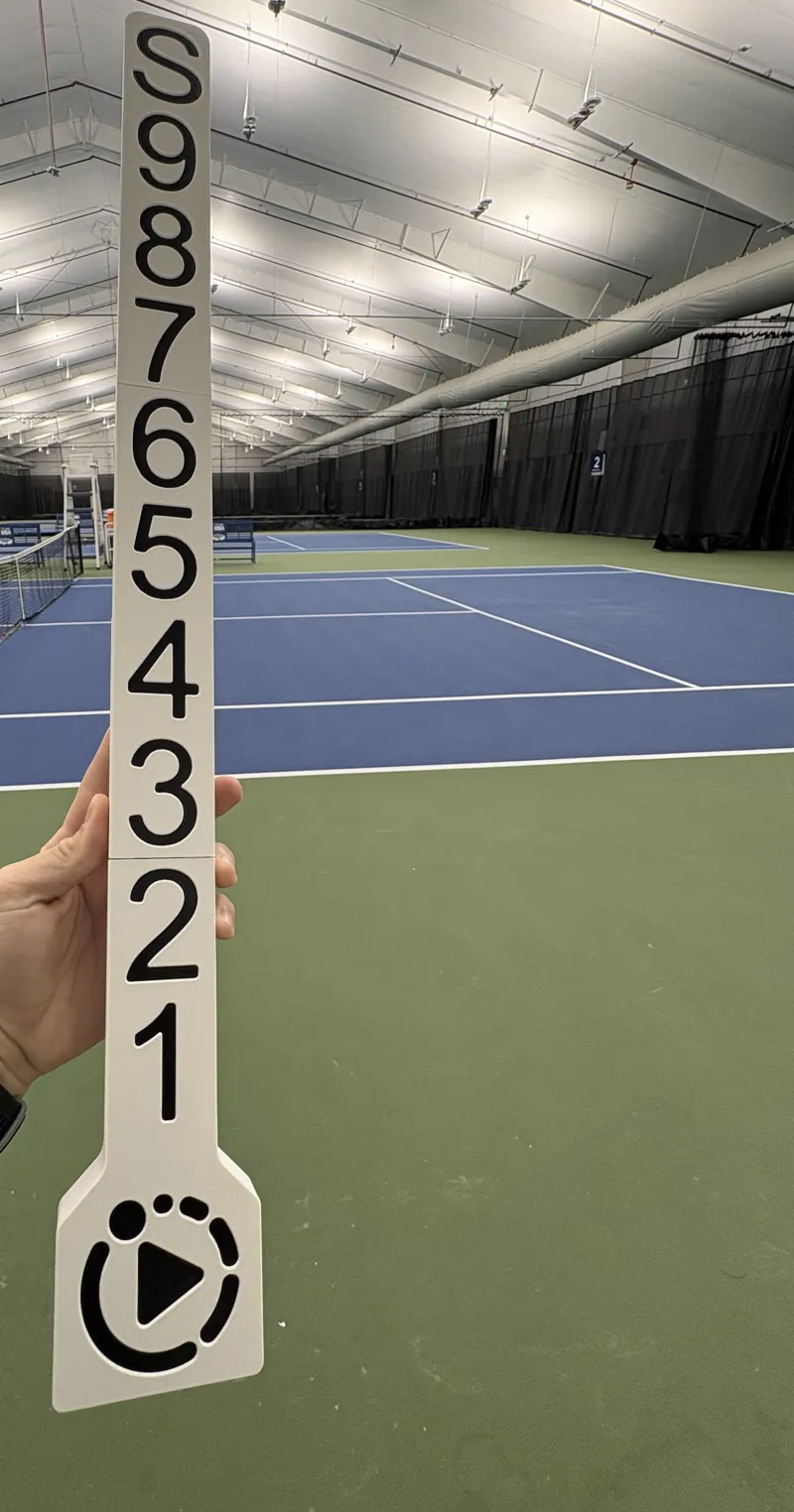
The Retro is a slim, sealed column that fits over the middle of a standard slide-peg tennis scoreboard, in place of its printed numbers. The tracks and notches stay just as they are, and each peg carries a small magnet the column can sense.
Fits standard slide-peg tennis scoreboards with two tracks of ten notches, 1 to 9 and S. Different board? : the sensing strip is made to length.
Pricing
The Retro and its subscription go together: $99 once for the hardware, then $19 a month for the service that puts the score on every screen.
The hardware
$99
one-time, per scoreboard
The subscription
$19/ month
per scoreboard
Pre-orders start soon. Prices in USD, per scoreboard. Every Retro needs its subscription, so you get them together.
For developers
Building a league, tournament or club app? The Retro gives it live scores from real courts, with no hardware to build. Every peg move reaches Save My Play in a moment, and your server a moment later: as a signed webhook, or whenever you ask over REST.
Every peg move becomes a signed JSON event sent to your server, retried for an hour if you’re down.
Read any court’s live score, or every finished match, with one HTTPS call.
Sets, games, who won what and a ready-made display line. A sequence number on every update means you never show an old score.
The same JSON whether a match is kept on a Retro, on our Courtside Tablet or by a partner’s feed. Build it once.
Get started
match.score_updated and show it anywhere: your app, your site, your screens.HTTPS only. Requests are signed with HMAC-SHA256, carry a sequence number per match and are retried for an hour. The same API serves scores from the Courtside Tablet and partner feeds.
POST https://scores.yourapp.com/hooks/smp
X-SMP-Event-Type: match.score_updated
X-SMP-Signature: t=1793983218,v1=9f3a…c41e

{
  "id": "evt_u4PDDjPkuMVPEH9YwEqrVrBM",
  "type": "match.score_updated",
  "created_at": 1793983218,
  "source": { "type": "scoring_device", "device_serial": "gne3n1" },
  "data": {
    "match": {
      "id": "m_Dv9kR2mW7qL4xT8nP3sF",
      "court": { "id": 279, "name": "Court 4" },
      "sport": "tennis",
      "status": "in_progress",
      "scoring": {
        "method": "scoring_device",
        "device_serial": "gne3n1"
      },
      "score": {
        "display": "6-4, 3-2",
        "sets": [
          { "games": [6, 4], "winner": 1 },
          { "games": [3, 2], "winner": null }
        ],
        "sets_won": [1, 0]
      },
      "seq": 18
    },
    "change": { "type": "game", "team": 1, "level": "game" }
  }
}
What your server receives when a peg moves. Trimmed: every field is in the API docs.
Questions
No. Same pegs, same notches, same numbers. They keep score exactly the way they always have.
Each peg carries a small magnet, and there’s a magnetic sensor behind every notch. Nothing touches, so nothing wears out.
Slide it back. The Retro sends the whole board every time, so a peg moved back is read as a correction, not a new game.
Yes. When a set ends, slide the spare peg up to S. Save My Play saves the set’s score and starts the next set at 0–0, all the way through a best-of-3 match.
Fit the column over the middle of your board, join its setup network from your phone and pick your Wi‑Fi. To get back to setup later, wiggle a peg back and forth a few times.
3 to 6 months on a charge. When it needs a top-up, charge it right on the board through the sealed USB‑C port.
Yes. The Retro is outdoor ready: the column is sealed for outdoor courts.
The Retro keeps the score and sends it as soon as the network is back.
Standard slide-peg tennis scoreboards with two tracks of ten notches (1 to 9 and S). Different board? Tell us: the sensing strip is made to length.
The Retro comes as one package per scoreboard: $99 once for the hardware, plus a $19 a month subscription. Every Retro needs its subscription. It puts the score on your stream, your recordings and the Save My Play app, and covers the scoring API, webhooks and device health in Venue Management.
Pre-orders start soon. Get early access and we’ll let you know as soon as they open.
Yes. Every change is available through the Save My Play API: a signed webhook the moment a peg moves, or a REST call whenever you want the score. It’s the same format as scoring on our Courtside Tablet, so one integration covers every court. The docs are at savemyplay.com/api-docs.
See Save My Play running on a real court. Most demos take 20 minutes.